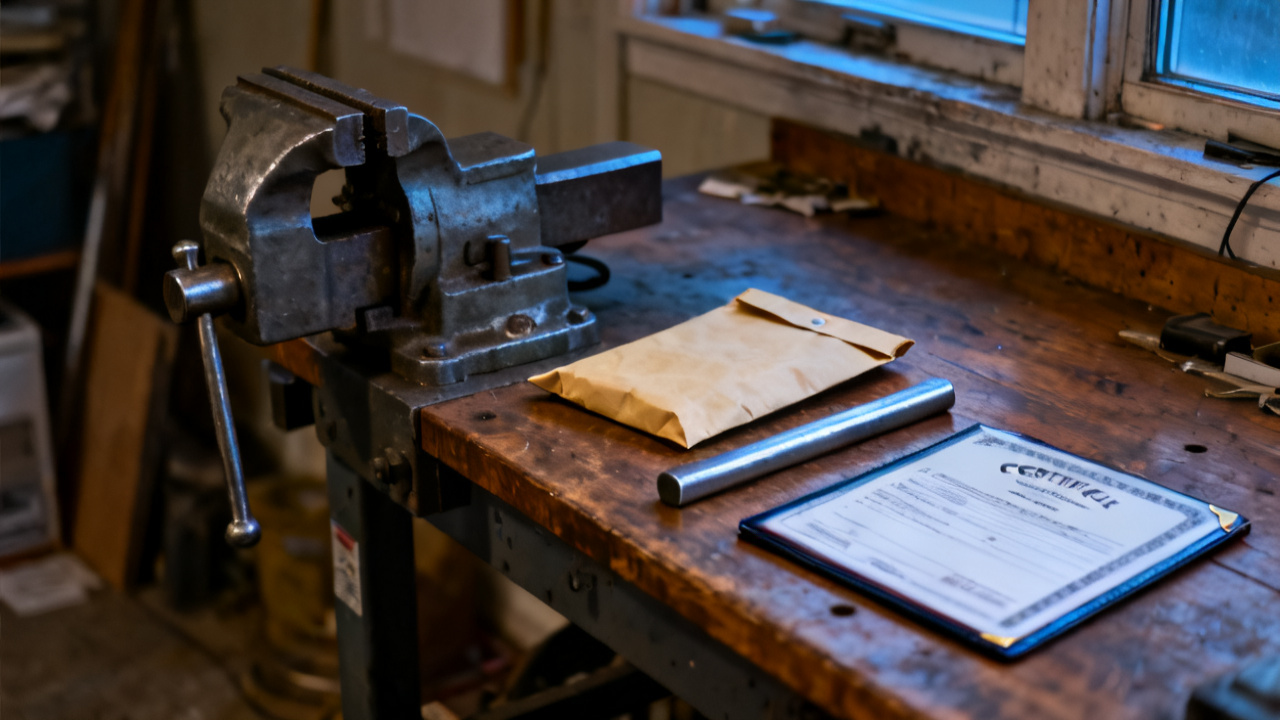
The form is filled in. The heat line is empty. You set the micrometer you were using to check the last finished blank on the 4140 bar stock down on the edge of the bench, and lean in to squint at the pre-printed fields to make sure you didn’t miss the heat number tucked in a different section. Every other field matches the parts you ran today: alloy grade listed as 4140 pre-hardened, quantity of 128 finished parts, tolerance verification marked as passing for all checked dimensions, machine ID for the CNC lathe you used, your operator stamp in the “run by” field. You don’t fill in arbitrary numbers here, even if the order is due to ship by end of shift, because a mismarked heat number breaks the full traceability chain that your shop stands behind for every order that leaves the floor.
What this traveler sheet confirms
This traveler sheet is the single source of truth for every step of this job, from raw material receipt to final shipping prep. The checked boxes near the top confirm you cut all blanks to the 3.2 inch length specified in the engineering drawings, you used the correct high-speed steel tool inserts for turning the outer diameter, you deburred all internal and external edges to a 0.005 inch maximum radius per spec, and you checked 10% of the run for dimensional accuracy, with all samples falling within the ±0.002 inch tolerance for the outer diameter and ±0.005 inch tolerance for the overall length. The signature field from the quality tech confirms they pulled 3 random parts from the run for hardness testing, and all measured within the 28-32 HRC range specified for the application. The only empty field is the heat number, which is the alphanumeric code tied to the specific mill run of the 4140 alloy you used for the order. This form does not get passed along to the shipping department until that field is filled correctly, because it ties every part in this run to its mill testing data for hardness, tensile strength, and chemical composition. You don’t guess here, because a wrong number can lead to parts being pulled from service years down the line if a flaw is found in a specific mill lot, costing your shop time, reputational damage, and potential contract penalties.
The single cross-reference you run against this cert form
You don’t need to pull old order records or call the material supplier to fill this blank correctly. You only need to complete this short, standardized cross-reference to confirm the number matches the exact material you used for this run:
- Walk to the raw material storage rack at the far end of the shop, and locate the partial 12-foot bar of 4140 you cut blanks from this morning, marked with the job order number 4729 in orange paint marker on the cut end.
- Find the original heat number sticker affixed to the uncut, mill-finished end of the bar, wiping away any cutting fluid residue or metal shavings with a shop rag so you can read all characters clearly, including any hyphens, leading alpha characters, or trailing suffixes.
- Cross-reference that number against the digital mill cert saved to the shop’s shared drive in the “2024 Raw Material Shipments” folder, to confirm the number matches the lot of 2-inch diameter 4140 bar stock you checked in two weeks prior.
- Write the full heat number clearly in the blank field on the form, using black permanent marker, making sure all characters are large enough to read when scanned into the digital file system, and initial next to the number to confirm you verified the source directly.
- Attach a printed copy of the corresponding mill cert to the back of this form with a single staple in the top left corner, making sure no part of the heat number, test values, or your signature are covered by the staple.
Illustrative example: If the heat number on the bar reads M24-7192-03B, you write every character exactly as printed, including the hyphens and trailing alpha character, to avoid mismatching it to a different lot with a similar numeric sequence that was delivered three months prior. This cross-check takes less than three minutes total, and eliminates 100% of the risk of incorrect heat number entry that comes from relying on memory or handwritten notes from your job packet. You don’t need to run any additional material tests at this stage, because the mill cert already contains the required testing data for the lot, and the quality team already verified the hardness of the parts you ran matches the spec.
When you pull this document from your batch folder later this week
Right now, after you complete the cross-reference and attach the mill cert, you tuck the fully filled form into the job’s batch folder, and slide the folder into the slot marked “pending final verification” at the Traveler Desk before you leave for the day, so the second shift lead can access it if they are processing the order for shipping before you return to your shift. When you pull this document from your batch folder later this week, you’re completing the final sign-off step before the parts are packaged for delivery. You will first confirm that the heat number you wrote is still legible, the mill cert is still attached to the back, and no other fields were altered after you signed off on the initial run details. You will then cross-check the number one more time against the remaining 1-inch cut ends of the bar that are stored in the labeled scrap bin for this job, just to be 100% sure you didn’t transpose any digits when you wrote it down earlier. Once you sign the final verification field on the bottom of the form, you will scan a copy into the shop’s digital job file system, and place the physical copy in the filing cabinet for 2024 completed jobs, where it will be stored for 7 years per industry traceability requirements. If the customer reaches out at any point during that window to ask for material traceability for their parts, this is the exact document you will pull to show exactly which lot of material their parts came from, who ran them, what machine they were run on, and all verification steps completed before the parts left the shop. You will also keep a photo of the heat number on the bar saved to your personal work folder for 30 days, just in case the physical form is damaged or lost before it is filed permanently. This final check takes less than a minute, and ensures that every part of the traceability chain is intact before the order leaves your control. You only sign off if every detail matches, because you take ownership of every part that runs through your station, and every document that travels with those parts from the bench to the customer.